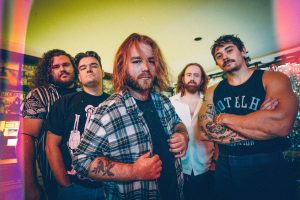
BareBones Ent got the chance to talk with the global supergroup, The Big Ol’ Nasty Getdown. We discussed recent releases, working with people all over, and about how the collective works. Take a look at what all co-founder, John Heintz, had to say when they chatted with BareBones Ent.
BBE: How did The Big Ol’ Nasty Getdown get started?
JH: The idea for The Big Ol’ Nasty Getdown came to me back in April of 2007 while I was touring with a band called The Lee Boys. It was a really formative time as I was learning the ropes of the business side of music and getting back into performing for the first time since high school.
One of our early shows was at a festival in Copper Mountain, Colorado, called Sunsation. It was a two-day lineup filled with jam bands that have since become pretty legendary. On the final night, there was this massive super jam with players from several of the bands on the bill, and I was lucky enough to be part of it. The energy on stage was incredible. Musicians who had never even met were connecting instantly, just letting the vibe lead the way. The audience was right there with us, and the whole thing felt like lightning in a bottle.
That moment stuck with me. I started thinking, what if you could capture that same kind of raw, first-time energy inside a studio? What if you brought together a rotating cast of musicians from different bands, locked everyone in a creative space for a week, recorded nonstop, and maybe even invited a few fans to be part of it? That’s where the seed of The Big Ol’ Nasty Getdown really started.
At the time, everyone loved the concept but thought it would be impossible to pull off. Still, the idea kept growing. On tour, we’d have late-night jam sessions at festivals, sometimes with Dumpstaphunk or Yo Mama’s Big Fat Booty Band or The New Mastersounds, and I kept noticing that same kind of spark. It wasn’t just about the music; it was about the social chemistry between the players. When that clicked, the creativity went through the roof.
Eventually, I connected with Derrick Johnson (trombone) and J.P. Miller from Yo Mama’s Big Fat Booty Band, and for the first time someone said, “Yes, let’s do this.” That was the moment everything became real. I moved to Asheville, North Carolina to start working with them and that’s where The Big Ol’ Nasty Getdown officially began.
BBE: Do you have a current total in this collective group now?
JH: I think the total is somewhere between 225-230 currently. It will likely grow a decent amount after the beginning of 2026 when I go back into production. There are a handful of new faces I’m going to be reaching out to about collaborating and several musicians who I’ve already spoken with who are confirmed. Having a large roster to work with makes things a lot of fun and keeps things fresh.
BBE: Does it surprise you at all that it has grown this much or the members that you have?
JH: In some ways, yes, and in some ways, no. I always believed The Big Ol’ Nasty Getdown had the potential to grow into something massive, but the road hasn’t been easy. There were plenty of moments where the challenges we faced could have easily ended the project. What continues to surprise me most is the resilience we’ve had over the years and our ability to stay fully independent from major labels and corporate influence. I’m proud that we’ve been able to take the hits, regroup, and keep moving forward when many would have folded.
When it comes to the growth, there’s definitely something to be said about the law of attraction. When you have living legends showing up in your sessions, on your albums, and at your live shows, it naturally draws in other players, especially those who were influenced by those same artists or grew up listening to their bands. Suddenly, they’re creating alongside their heroes, and that kind of energy is contagious.
I think another big part of our longevity comes down to reputation. It’s always been important to me that every musician leaves a session or a show feeling proud of what they just created. We put a lot of care into making sure the environment is comfortable, safe, and open where everyone has space to contribute without feeling crowded or overshadowed. The vibe has to be natural and collaborative for the magic to happen. And, of course, integrity is everything. We’ve never chased trends or written to fit a moment. The music is honest, timeless, and fun for both the musicians and the listeners. That sincerity always comes through.
When all those elements, community, respect, freedom, and authenticity come together, they create an atmosphere that naturally attracts great players. I never could have imagined, back at the start, that we’d one day have the kind of talent we do now. It’s been incredible to see so many of the artists who inspired me become not just collaborators, but friends.
BBE: What do you feel that The Big Ol’ Nasty Getdown offers you as musicians?
JH: I think The Big Ol’ Nasty Getdown offers a unique and safe space for musicians to truly explore their creativity and take some artistic risks, often working on music that might be outside their usual genre. It’s a place where musicians might get the rare chance to collaborate with one of their biggest influences, or finally work alongside friends in the industry they’ve never been able to record with before. It’s all about community with the project. The goal is that everyone involved throughout the years has been able to take away something positive beyond the music itself. It’s also an incredible resource hub because we have so many talented people involved. There’s a wealth of experience, knowledge, and connections being shared among the musicians and artists involved which helps push everyone forward. Most importantly, it’s a space built on mutual respect. I make sure everybody involved is represented with the highest level of integrity and appreciation.
BBE: What about as music fans?
JH: I think The Big Ol’ Nasty Getdown offers fans a truly unique experience. One where they can hear one-of-a-kind collaborations and see some of their favorite musicians performing and recording together in combinations that have never happened before. We’ve been able to experiment in ways that most traditional bands simply can’t.
For example, our RepurposE Purpose Vol. 1 EP. All of the songs on that EP were built entirely from a single, fully arranged drum track. I sent the drums to a dozen or so different bass players and asked each to make the first move. Once each bassist submitted their part, I built every track up layer by layer, instrument by instrument, turning each version into its own fully realized song. The outcome was a collection of tracks that all share a common rhythmic DNA, yet sound completely different. The idea was to explore the concept that creativity is infinite, and that everyone will hear and respond to the same foundation differently. The results were incredible. Each song evolved into something distinct, to the point that even people directly involved in the EP didn’t realize all the tracks shared the same identical drum track. Some songs felt faster or slower, even though the tempo never changed. That illusion came from how each bassist and subsequent instrumentation interacted with different parts of the drums, masking certain rhythms, emphasizing others, and completely transforming the feel.
Another great example is the song “Creatures of Habit” from our Volume 2 album, which brought together members of Parliament-Funkadelic, Fishbone, and Living Colour for the first time on an original track written collectively from scratch.
“Dream”, also from Volume 2, is another standout. “Dream” features Taylor Dayne on vocals alongside members of Mudvayne, The Time, and The Neville Brothers—a lineup you’d never expect to see together, yet the end result came together seamlessly and sounds like they’ve all been bandmates for years.
The Getdown also serves as a platform for fans to discover amazing talent which may not have come on their radar otherwise as well as new “need to know about artists’ fresh to the scene. It’s also a platform to highlight incredible musicians who might not always be household names but have played major roles in shaping the sound of modern music. It’s an opportunity to shine light on those often-overlooked players and to revisit eras of sound that inspired generations of listeners as they grew deeper into music.
BBE: On Sept. 19th you released your 3rd album, Volume 3, what did this album offer listeners?
JH: Volume 3 Offers listeners a fresh experience with a little extra grit sonically while also maintaining a comfortable familiarity reminiscent of the previous 2 Volumes. We wove together players from V1 and V2 along with several new faces for this record. As the project has evolved over the years so has our sound. We’ve continuously brought in musicians from all different genres which has expanded our sound bringing us into new territories.
BBE: Can fans expect a different listening experience to previous releases or is this in a similar style?
JH: I’d say it’s a bit of both. Volume 3 definitely brings a new listening experience, but it also carries forward the spirit and continuity that’s always defined The Big Ol’ Nasty Getdown. There are some fresh faces joining the project this time around, alongside a number of musicians who’ve been part of it since the early days. That combination of new energy and familiar chemistry gives this record its own distinct personality.
This is the first volume to include past and present members from a range of incredible groups like Ozomatli, Jurassic 5, New Power Generation, Suicidal Tendencies, String Cheese Incident, Daughtry, and the Red Hot Chili Peppers, among others. Having that variety of backgrounds and styles really pushed the music into new territory. It’s exciting to see how these worlds collide when you bring together artists who might never otherwise cross paths.
We’ve also got vocalists Maiya Sykes and Justin Poree making their debut appearances on Volume 3, and they’ve both added something completely fresh to the mix bringing a new vibe, and new textures that really stands out. At the same time, we’ve got returning voices like Angelo Moore and Rev. Desmond D’Angelo, who help anchor the project in that familiar Getdown sound. It’s that balance between the new and the known that keeps the project evolving while still feeling connected to its roots.
In a lot of ways, I think Volume 3 comes across as more sophisticated and polished. Over the years, I’ve developed and refined a number of production techniques that have brought tremendous results. You can really hear that growth on songs like “Yoda Mode,” “Super Galactic,” and “Joy Rider.” Each of those tracks has its own distinct character, but they all share a level of clarity and intention that reflects how far we’ve come as a collective.
What’s always made The Big Ol’ Nasty Getdown unique is that no two songs ever feature the same lineup of musicians. Every track is its own living, breathing creation, a one-of-a-kind moment in time. That means each album takes on a different flavor from the one before it. But even with all that variation, there’s still a natural flow from front to back that keeps the listener grounded. It’s diverse, but cohesive.
A lot of people might not realize how deep the roots of some of these songs go. A couple tracks on Volume 3 actually trace back to sessions from Volume 2, and even all the way back to Volume 1. “Super Galactic” is a perfect example. The chassis of the song actually began back in 2008, during one of the very first Getdown sessions. I took the original drum track from a song that never came to life and built up something new on top of it. Over the years, kept building on it — adding musicians one by one as the song evolved. It’s been incredible to watch something that started nearly two decades ago grow into a fully realized piece of music that still feels alive and relevant today.
Another would be “Birds of a Feather”. That song was recorded in 2012 at the ‘Volume 2’ sessions. The only thing that I added to that song after the fact was a second guitar. Tim Stewart, who I do a ton of work with, added the dreamy guitar parts in the “verses” along with the solo at the end of the song. Since we write based on vibe and what feels good, the music has the ability to sound timeless. This is a great thing for me because it often takes some time to release the music.
On the flipside of the coin, Joy Rider was the last song to be finished on the album and was still in production a month and a half before the album’s release date. I decided at the last minute to add keys and horns to the tune after I had already convinced myself that it was going to be a stripped down gritty 3 piece arrangement. The night before I was to sign off on the final mix of ‘Volume 3’ I decided to see what it would sound like with keys and horns. This delayed the vinyl pressing of Volume 3 about a month but I feel like it was worth it because I love the end result of the song with the additional instrumentation.
BBE: Is it hard to work on an album with so many additional moving parts? How do you navigate getting everyone’s parts in?
JH: I’m used to big ensembles with players constantly coming and going so it’s second nature I guess. Spending a lot of time around Parliament Funkadelic in my early years made productions with lots of variables and personnel the norm. It doesn’t mean there aren’t challenges to overcome, it’s more that when those challenges arise I can remain calm and collected while seeking solutions.
In the beginning, it was definitely a challenge managing all the moving parts. But over the years, I’ve developed a kind of blueprint that keeps everything organized for the Getdown. Honestly, the key to a lot of it is spreadsheets, lots of spreadsheets.
At any given time, there are a lot of songs in motion and not just for the next album, but for future releases as well. I like to work well in advance so there’s always a surplus of material to pull from. That approach gives me the freedom to hold out for a specific player I’m hearing for a song, rather than rushing to meet a deadline.
It can get complicated at times, but I stay on top of it by keeping detailed notes, organizing songs by player, tracking what still needs to be done, who’s on what, what’s missing, and what’s close to completion. The hardest part is scheduling. Everyone in the project has their own touring commitments with their primary bands, so coordinating availability can be tricky. Working remotely has made things much easier though. In the early days, we had to manage a ton of travel. Flying in a couple dozen people for sessions and juggling all the logistics beyond just the recording itself was a real headache.
Sure, a five-piece band with the same lineup on every track is simpler from an organizational standpoint, but part of what makes The Getdown special is its fluidity. Songs evolve as they’re being created, and we often bring in additional players mid-process to add parts or new energy. That flexibility has become part of our DNA. Having a rotating cast of musicians both in the studio and on the road is just how The Getdown operates and it’s ingrained in the way we make music.
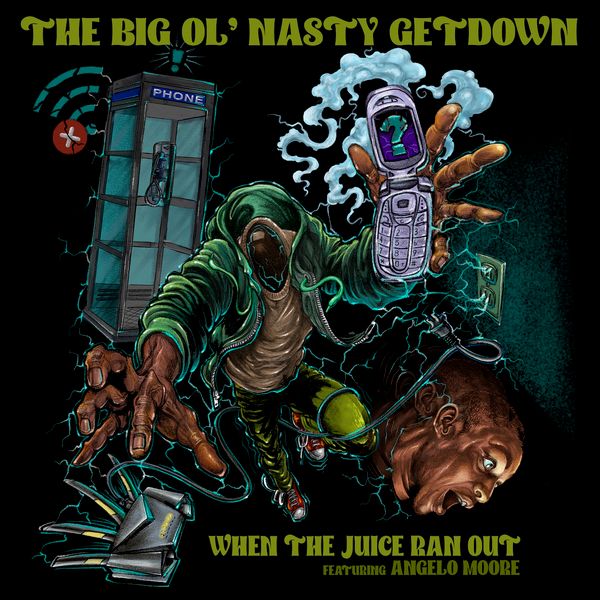
BBE: On this album, you have the earlier released single, “When The Juice Ran Out (Feat. Angelo Moore)”. How did this song come together?
JH: This song started out as a fully arranged isolated drum track Jack Irons had recorded at a session we did in 2016. Parliament Funkadelic Alum Rodney ‘Skeet’ Curtis was the first person I sent the drum track to. Rodney wrote and recorded his bass part and sent it back to me. I took a listen and thought TIm Stewart, who is Lady Gaga’s guitarist, would be perfect for it. He’s played with everyone from Suicidal Tendencies to Rhinna. After Tim recorded he sent it back and what I heard had Angelo Moore from Fishbone as the goto for lyrics and vocals. Angelo also added Sax to it which made it complete and ready to edit and mix. Fabrizio Grossi has been mixing most of our music for the past couple of years. Once mixed it was sent to Dave Gardner to master and get it ready for both Digital and Vinyl. Johnny DiDonna and Jeff Wood did up the art for the song which turned out exactly as Angelo had envisioned.
BBE: What does this song mean to you?
JH: In a culture consumed by likes, swipes, and constant connectivity, “When the Juice Ran Out” confronts the reality that many no longer know how to exist without their devices. In a world overflowing with emojis, acronyms, abbreviations and algorithm-fed scrolling, this song is a necessary reflection on what we’ve lost in our addiction to the digital. It’s a song about how deeply people are plugged in, forgetting how to exist without a screen or a signal, and how fragile this hyper-connected world really is if the power goes out. The song explores how deeply we’ve traded real-world presence for the digital illusion. It’s a wake-up call for what happens when the power dies, the batteries drain, and we’re forced to face ourselves in an unplugged, analog world.
BBE: How have fans reacted to the song?
JH: As near as I can tell, “When the Juice Ran Out” has been well received by our audience. The handful of folks I’ve spoken to seem to dial in to it along with “Joy Rider” and “Yoda Mode”. All have been digging Skeet’s bass line in Juice and Angelo Moore is always a crowd favorite. It has all the elements to appeal to a wide audience and is of a subject matter that raises an important question.
BBE: What is the best way for fans to stay informed on your releases?
JH: Website: www.thebigolnastygetdown.com
Store: the-big-ol-nasty-getdown.myshopify.com/
Insta: @bigolnastygetdown @getdownmusic
Facebook: www.facebook.com/TheBigOlNastyGetdown
Bandcamp: https://thebigolnastygetdown.bandcamp.com/
Youtube: @bigolnastygetdown
Spotify:: spotify:artist:6ErnelFia9CsecSaT6z4is